
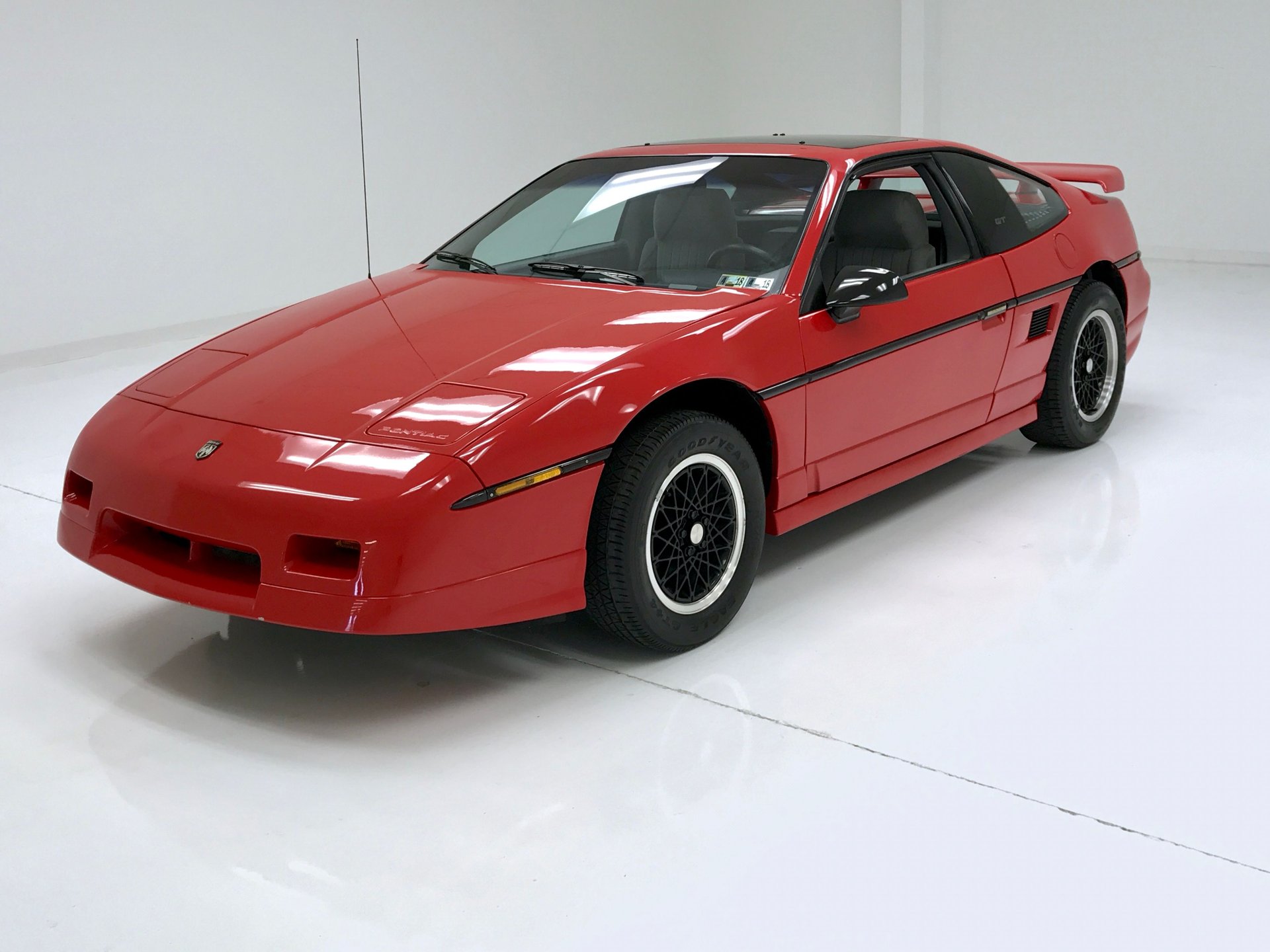
The Pontiac Fiero has a very specific character. Its mid-engine layout, compact shape, and mechanical identity are part of why people still work on these cars decades after production ended. FieroLink GT is being developed around that reality: the application should add modern visibility without pretending that a Fiero is a contemporary connected vehicle.
A modern diagnostic layer for an older car
FieroLink GT is a local-first Windows vehicle-intelligence workspace for 1984–1988 Pontiac Fiero models. Its first responsibility is to communicate with the factory GM engine-control computer through the Assembly Line Diagnostic Link, or ALDL. The original ECM can provide useful engine-management data, but the exact values and update behavior depend on the model year, engine, ECM calibration, adapter, and communication setup.
The app is intended to retrieve the data that is actually available, present it clearly, and log it for later review. That means live digital instrumentation is only one part of the product. A mechanic or owner should also be able to examine a drive afterward, compare readings over time, record diagnostic observations, and connect a symptom to the conditions under which it occurred.
Seeing beyond the factory ECM
The factory computer cannot see every system a modern driver might want to monitor. FieroLink GT can therefore communicate with an optional auxiliary sensor module. That module is intended to add carefully identified signals—such as extra temperatures, pressures, or electrical measurements—while keeping their source and limitations visible in the application.
This distinction matters. A value supplied by an auxiliary sensor is not automatically an ECM value, and a calculated estimate is not the same thing as a direct measurement. The interface should make those boundaries clear so that a user knows what came from the factory diagnostic stream, what came from an added sensor, and what was derived by software.
Diagnostics, maintenance, and history in one place
FieroLink GT is being shaped as more than a dashboard. Its working scope includes:
- ALDL data capture and session logging;
- live instrumentation and diagnostic views;
- maintenance records and service history;
- performance telemetry for comparable driving conditions;
- anomaly detection that highlights unusual patterns for review;
- historical trend analysis across logged sessions;
- an AI-assisted troubleshooting surface that keeps the underlying readings visible;
- a contained reference library for the manuals and information gathered for the project.
The purpose of bringing these areas together is practical. A fault code, a temperature trend, a maintenance note, and a service-manual procedure can describe the same problem from different angles. Keeping them in one local workspace makes it easier to move from observation to testing without losing the context around the car.
Guarded tuning belongs behind a separate boundary
Advanced versions may support calibration analysis and guarded tuning assistance when compatible tuning hardware or a replacement ECM system is installed. That is a separate capability from reading and logging factory data.
The distinction is intentional. The ordinary diagnostic path should remain useful with the original vehicle hardware and should not imply that the application can freely rewrite an ECM. Any future tuning support must identify the compatible hardware, show what is being changed, preserve a recoverable original calibration where possible, and require deliberate confirmation before a write operation. “AI-assisted” should mean that the software helps explain and review a proposed change—not that it makes an unreviewed calibration decision for the owner.
A contained reference library
The project also includes a contained manual and reference area. The goal is for mechanics and owners to read the available Fiero material from inside the application rather than needing a separate reader or a constant internet connection. A document can be useful for identifying a connector, checking a procedure, or understanding the limits of a particular diagnostic value.
Reference material still needs provenance. FieroLink GT should identify the manual or source for each document, keep the bundled files with the application’s local data, and make it clear when an external website is being opened instead of presenting an online page as if it were part of the local database.
Built for the car that is actually in the bay
The vehicle selector is meant to prime the application for the selected Fiero year and model rather than applying one blanket profile to every car. A 1984 coupe, a later SE, and a GT may share much of their shape while differing in engine, ECM, calibration, wiring, sensors, or available data. Year-specific naming and configuration are therefore part of the diagnostic foundation, not just presentation details.
FieroLink GT is still in development and is currently a request-required project. The direction is deliberately grounded: connect to the hardware that is really present, label measurements honestly, preserve the manuals and history locally, and give the mechanic enough context to make a sound decision. The aim is not to replace the Fiero’s character. It is to give that character a more capable diagnostic companion.